“leaf shape” search results (300)

Introduction of Brand types of Coffee beans introduction of Coffee planting Environment
. The Robusta species (scientific name Coffea robusta Linden) is a leaf rust-resistant variety found in the African Congo, which teaches the Arabica species to be more resistant to the disease. People like to compare robusta species with Arabica coffee. In fact, robusta species is a mutant of Congo species (scientific name Cofffea canephora), so it should be compared with Arabica species.
2016-07-06 Coffee beans brands types introductions coffee planting environment Robes Booth learning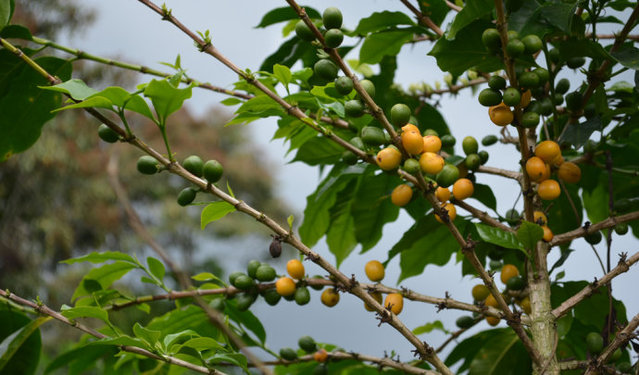
SCAA interprets Typica and Bourbon of Fine Coffee
There are more than a hundred varieties of coffee, the more common coffee are: Arabica, outstanding personality, unique flavor, is the main force of boutique coffee, mainly used for coffee shop management and high-end coffee market supply; Robusta, rough flavor, high caffeine content, not boutique coffee, often used for instant coffee processing and Italian coffee mixed beans. Ethiopia Typica and Yemen Bourbon are
2016-07-14 SCAA interpretation boutique coffee Typica Bourbon
Fine coffee Colombian coffee species morphology
The main varieties of Colombian coffee are small grains of coffee. Plants are small trees or large shrubs, 5-8 m tall, usually much branched at base; old branches gray-white, nodes dilated, young branches glabrous, compressed. Leaves thinly leathery, ovate-lanceolate or lanceolate, 6-14 cm long and 3.5-5 cm wide, tip long acuminate, acuminate part 10-15 mm long, base cuneate or slightly obtuse, rarely rounded, entire or
2016-05-29 Boutique Coffee Columbia species Morphology varieties Major
What are the main categories of coffee flowers?
The main classification of coffee flower is directly poured into the formation method, that is, the foamed cow is still quickly poured into the espresso without the separation of milk and milk foam, and after the milk, milk foam and espresso are merged to a certain saturated state, the hand shaking technique is used to make the milk foam and milk float in Italian concentration based on the principle of water grain fluctuation.
2014-08-29 Coffee flower drawing flower drawing works flower drawing technology
Species morphology of Colombian coffee bean
The main varieties of Colombian coffee are small grains of coffee. Plants are small trees or large shrubs, 5-8 m tall, usually much branched at base; old branches gray-white, nodes dilated, young branches glabrous, compressed. Leaves thinly leathery, ovate-lanceolate or lanceolate, 6-14 cm long and 3.5-5 cm wide, tip long acuminate, acuminate part 10-15 mm long, base cuneate or slightly obtuse, rarely rounded, entire or
2016-06-03 Columbia Coffee beans species Morphology Coffee varieties Major small
Introduction to the flavor and taste characteristics of citrus coffee manor in Jinchu Valley, Kenya
Although the yield of SL28 was not as high as expected, the copper leaf color and broad bean-shaped beans have great sweetness, balance and complex flavor, as well as remarkable citrus and plum characteristics. SL34 is similar to SL28 in flavor, with a heavier, fuller and cleaner finish than SL28, except for the complex acidity and great sweetness of the finish. SL34 owns French missionaries.
2016-09-12 Remarkable citrus Kenya Jinchu coffee manor producing area flavor taste characteristics
The course of Italian Coffee: how to Control the Symmetry of Coffee pattern? what are the main points?
The creation of coffee flowers, from the beginning of the design, baristas began endless devil-like exercises, the process of repeated basic skills is extremely boring and tiring, very few people understand the process behind the perfect coffee flowers, let alone understand. Today, the skill of coffee flower pulling is no longer a heart-shaped, leaf-shaped, segmented tulip, but an eternal creative topic for baristas.
2015-12-07 Italian style coffee tutorials how to control spend weigh sex main points what is it
Morphological characteristics and planting environment of small-grain coffee
Morphological characteristics edit small trees or large shrubs, 5-8 m tall, base usually much branched; old branches gray, small-grained coffee (6) nodes inflated, young branches glabrous, compressed. Leaves thinly leathery, ovate-lanceolate or lanceolate, 6-14 cm long and 3.5-5 cm wide, tip long acuminate, acuminate part 10-15 mm long, base cuneate or slightly obtuse, rarely rounded, entire or present
2016-06-13 Small grains coffee morphological characteristics planting environment editors trees or large
Arabica coffee bean planting species morphology Colombian coffee bean
The main varieties of Colombian coffee are small grains of coffee. Plants are small trees or large shrubs, 5-8 m tall, usually much branched at base; old branches gray-white, nodes dilated, young branches glabrous, compressed. Leaves thinly leathery, ovate-lanceolate or lanceolate, 6-14 cm long and 3.5-5 cm wide, tip long acuminate, acuminate part 10-15 mm long, base cuneate or slightly obtuse, rarely rounded, entire or
2016-04-22 Rabbi Coffee beans planting species Morphology Columbia Coffee products
Panama Estate Coffee Beans
Arabica species originated in Ethiopia's Abyssinia Plateau (now Ethiopia Plateau). It was mainly eaten as medicine in the early stage (Islamic couples used it as a secret medicine for physical and mental treatment or to wake up). In the 13th century, it cultivated the habit of baking and drinking. In the 16th century, it was introduced into Europe via Arabia, and then became a favorite drink of people all over the world.
2016-06-07 coffee beans basics introduction panama estate rabbi species origin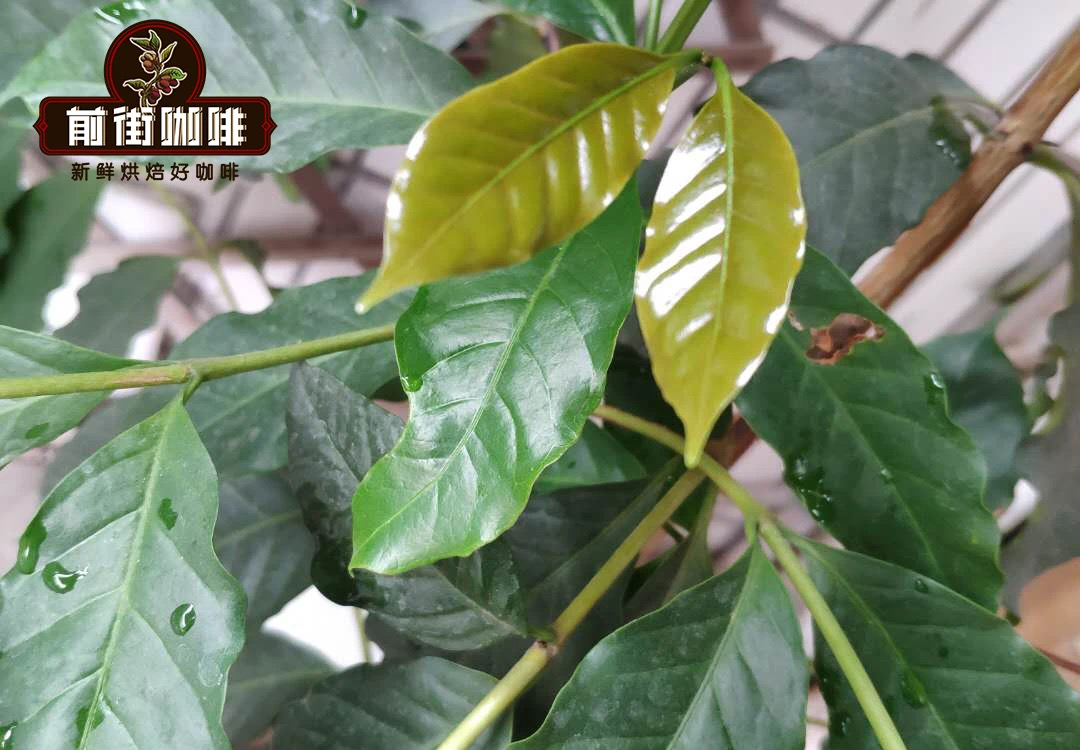
Historical and Cultural stories of three kinds of Coffee beans introduction to the Flavor characteristics of Arabica Coffee beans
Liberica (Liberica) Coffee is recognized as the third largest coffee variety in the coffee trade. It is also grown at low elevations. This kind of coffee is produced in Africa and is exported only to Europe. It is also a cheap coffee. It is very similar to Robus (Robusta). Robusta comes from a high yield and is not susceptible to disease.
2016-06-06 Common three coffee beans species flavor introduction Liberia Liberi
Basic knowledge of Coffee beans (1)
Coffee belongs to the evergreen shrub of the genus Rubiaceae, which is centered in the tropics. There are about 6000 species of Rubiaceae belonging to 500 genera.
2014-07-15 Coffee knowledge coffee basics coffee encyclopedia
Colombian coffee bean species morphology Central and South American flavor
Species Morphology Colombian Coffee Plant Morphology Colombian coffee is mainly small grain coffee. Plants are small trees or large shrubs, 5-8 m tall, usually much branched at base; old branches gray-white, nodes dilated, young branches glabrous, compressed. Leaves thinly leathery, ovate-lanceolate or lanceolate, 6-14 cm long and 3.5-5 cm wide, tip long acuminate, acuminate 10-15 mm long, basal
2016-04-20 Columbia coffee beans species morphology Central and South America flavor brother
The main classification of coffee flower is directly poured into the formation method
The main classification of coffee flower 1. Direct pouring into the formation method is to use the frothed cow still, in the state where it has not yet produced milk and milk foam separation, quickly pour it into the espresso coffee, and after the milk, milk foam and espresso are fused to a certain saturation state, use the shaking skills of the hand to make the milk foam and milk float in the Italian concentrated coffee by using the principle of water fluctuation.
2015-10-20 coffee floral main sort direct pour method
The relationship between Kenyan coffee and Arabica coffee beans
Arabica coffee accounts for about 65% and 80% of the world's coffee beans, and its excellent flavor and aroma make it the only coffee among these native species that can be drunk directly and alone. However, its resistance to drying, frost, diseases and insect pests is low, especially to the biggest natural enemy of coffee, leaf rust, so all producing countries are committed to improving varieties. For example, the well-known Sri
2016-06-05 Kenya coffee rabbi coffee beans relationships the world grow
Choose coffee cups, Italian lattes, espresso, spaghetti beans
Many baristas like the sharp mouth to pull the flower jar, feel that the mouth is sharp, the wall is thick, appear professional, buy one after another. They show off one after another on various occasions, but the probability of failure is very high, and some even use today's poor condition as an excuse. But in fact, because the exit of the pointed-mouth flower jar is deeper, it is more convenient to control the flow rate, and the force can be uniform in the rocking operation, so this kind of flower-pulling jar is made of fine type.
2016-07-14 Choice coffee pull flower jar Italian latte concentrated Italian blending many
Arabica beans Arabica coffee beans are different from other coffee beans
Arabica beans are an important type of commercial coffee. They bear fruit within three years and have excellent aroma and acidity. Arabica coffee beans are mainly produced in South America (except Argentina and Brazil), Central America, Africa (Kenya, Ethiopia, etc., mainly East African countries), Asia (Indonesia, Yemen, India, Papua New Guinea)
2016-04-30 rabbi beans coffee beans other distinction business coffee important
Varieties of coffee beans
Several main coffee varieties and their characteristics are introduced here. Typica, also known as Tiberka Tibika, is the closest to the native species of Arabica, where almost all Arabica varieties originate. Widely cultivated in Central and South America in the past, the bean is long in shape and has excellent aroma and sour taste, but it is not resistant to leaf rust and requires quite a lot of shading trees to lead to production.
2014-06-30 Coffee bean varieties coffee bean characteristics boutique coffee beans
The three native species of coffee, the main varieties of Colombian coffee.
Varieties resistant to leaf rust found in Congo, Africa, teach Arabica species to be more resistant to the disease. People like to compare the robusta species to the Arabica species of coffee. In fact, the robusta species was originally a mutant of the Congolese species (scientific name Cofffea canephora), so it is the Congolese species that should be compared with the Arabica species. To this day, however, Robusta species
2016-05-27 Coffee three native Colombian major variety Africa Congo found tolerance
Introduction to the flavor and taste of Arabica coffee manor in Indonesia
Varieties resistant to leaf rust found in Congo, Africa, teach Arabica species to be more resistant to the disease. People like to compare the robusta species to the Arabica species of coffee. In fact, the robusta species was originally a mutant of the Congolese species (scientific name Cofffea canephora), so it is the Congolese species that should be compared with the Arabica species. To this day, however, Robusta species
2016-07-20 Indonesia Rabbi Coffee Manor producing area Flavor taste introduction Africa